Cardiac arrest does not really feel abstract when it happens before you. It appears like a coworker dropping over a desk, or a grandparent going silent throughout supper, or an unfamiliar person at the gym that instantly quits relocating. In those moments, assistance gets here in minutes if you call for it, however a brain can endure irreparable damages in four to six mins without oxygen. The interval between collapse and the first chest compression is where average individuals make the distinction. That is the heart of neighborhood safety and security, and it is why CPR training belongs in the exact same group as finding out to drive or swim.
I have actually taught first aid and CPR for many years to educators, tradies, moms and dads, protection team, and high school trainees. The pattern is consistent. People show up believing CPR training is a box to tick, after that leave recognizing it as a life skill that re-wires just how they see risk, exactly how they make decisions under stress, and just how they turn up for others. The advantages run deeper than a certificate for your budget. They alter a neighbourhood's odds.
What CPR Really Does, and Why Seconds Trump Everything
CPR, or cardiopulmonary resuscitation, is not concerning "rebooting the heart" with your hands. It is a way to maintain blood transferring to the brain and essential organs when the heart has stopped pumping properly, generally because of a sudden heart attack. Excellent upper body compressions generate a portion of regular blood circulation, however that portion is enough to acquire time until a defibrillator can deal with a shockable rhythm or advanced treatment can take over.
The math that underpins seriousness is straightforward and grim. For every single minute without CPR, the opportunity of survival from heart attack visit about 7 to 10 percent. If a bystander begins CPR within the initial min or more, survival rates can increase or perhaps triple contrasted to cases without any early activity. These are big swings driven by tiny choices: step forward, call for aid, begin compressions, ask somebody to bring the AED.
I have watched family members ice up while a teen from a lifeguard course took fee and led efficient compressions. Training does not make you brave. It offers you a script your body can follow when your mind is buzzing.
The Real-World Forming of a Bystander Rescue
If you have actually not taken a cpr course, it is very easy to think of disorder. In method, a well-taught cpr training course damages the minute into a sequence you can hold.
You check for responsiveness. You scream for aid. You call emergency situation services on audio speaker so the operator can instructor and capture the address while you remain with the person. If there is no regular breathing, you start chest compressions at a deepness of about 5 to six centimeters for an adult, at a rhythm near to the beat of "Stayin' Alive." If an AED appears, you transform it on, position the pads as detailed, and follow the motivates. The device evaluates the rhythm and informs you whether to push the shock switch. You return to compressions quickly after.
I have actually seen this adjusted on the fly in a child care setup with a young child, and in a carpark with a male twice my dimension. Method differs with age and body type, but the backbone of action remains: push hard, press fast, enable complete chest recoil, minimize pauses, and utilize the AED swiftly.
The Ripple Effects of Training Beyond Cardiac Arrest
When individuals sign up in a first aid course, they usually anticipate plasters and recovery placements. They entrust a wider lens. First aid and cpr training improves risk acknowledgment, interaction skills, and team coordination. You come to be the individual who notifications the choking risk at a barbecue and cuts grapes lengthwise for kids. You discover to scan for an exit course at crowded locations, not from paranoia yet from habit.
In workplaces, this mindset minimizes not simply the intensity of events, yet their regularity. A warehouse that trains and rejuvenates its very first aiders usually tightens its housekeeping, labels its chemical stores clearly, and areas automated exterior defibrillators where they can be found without a scavenger search. Individuals take breaks when they should. They report near misses. Safety comes to be social, not performative.
Training also improves misconceptions. I still fulfill adults who think you ought to put something in the mouth of a person having a seizure. You ought to not. Or that you can "really feel" a faint pulse under stress and anxiety. Numerous can not. Standard first aid and cpr courses remedy these behaviors delicately, and replace them with reputable skills you can use under pressure.
A Short Story From a Grocery Store Aisle
Several years back, a coworker of mine was shopping when a male broken down near the fruit and vegetables section. He defined the checkout line going quiet, then the spread sound of individuals shouting for water, which never assists. He stepped in, identified himself as first aid trained, checked for breathing, and started compressions on a glossy floor tile floor.
A shop staff member showed up with an AED from the wall alongside the personnel area. It was dirty, which told us no one had touched it in months. Still, it powered on. The gadget suggested a shock. They cleared and pushed the switch, then returned to compressions. The ambulance showed up after the 2nd shock. The male lived.
What maintained that male active was not good luck. It was the intersection of 3 ordinary decisions: the grocery store had mounted an AED, my colleague had actually taken a cpr course the previous spring, and a spectator had the clearheadedness to call emergency services loudly and clearly. Area security is developed out of these little, boring investments.
What a Good CPR Course In Fact Teaches
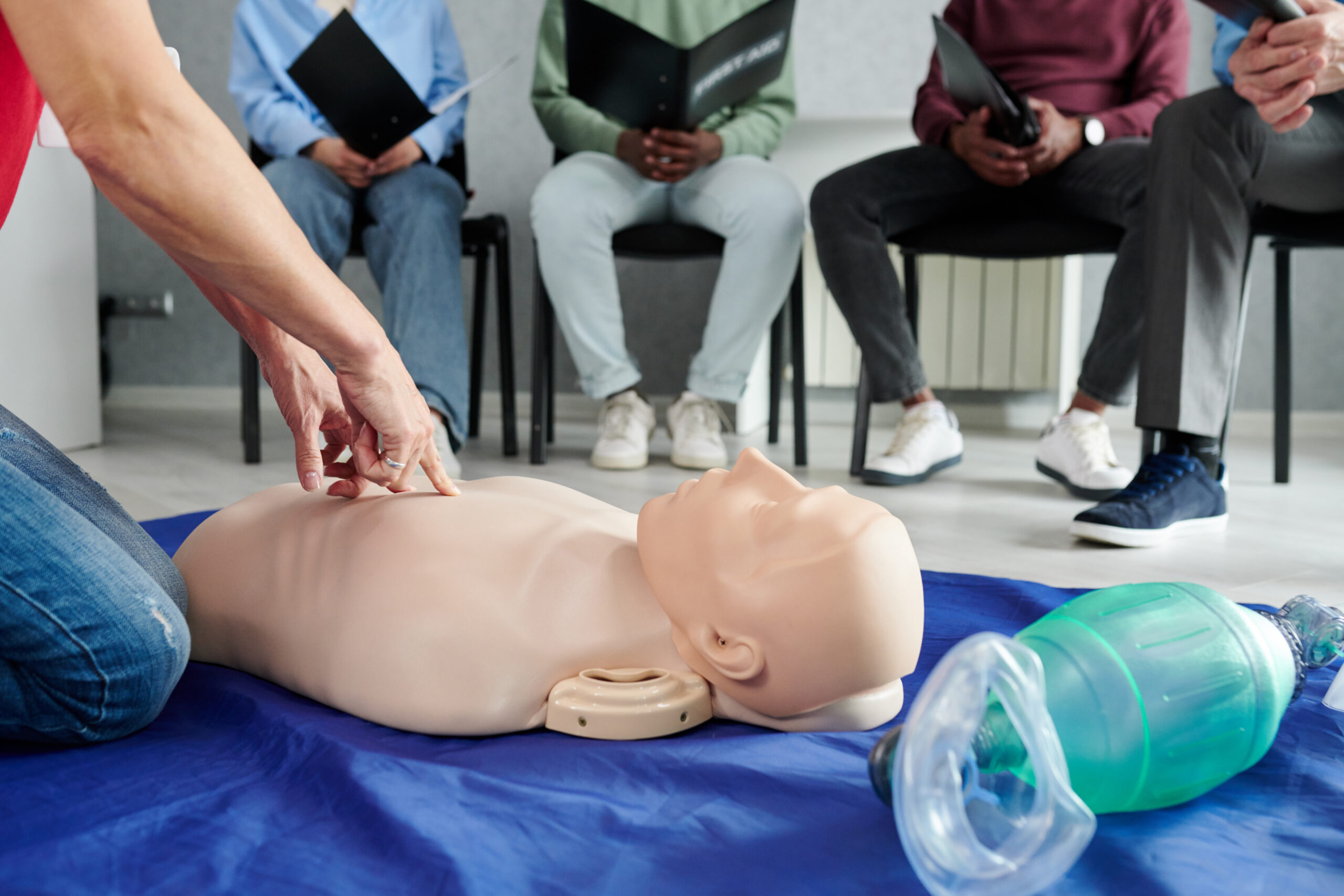
There is a difference between checking out a poster and exercising on a manikin until your arms shake. Evidence-based training threads the line in between realism and safety and security. An efficient cpr course should consist of the following:
- Hands-on compressions with feedback on depth and rate, ideally utilizing manikins that measure efficiency and give real-time cues. AED usage throughout, including pad positioning on adults and children, voice prompts, shock shipment, and safe resumption of compressions. Airway abilities proper to the level of training, from head-tilt chin-lift to pocket mask use, and support on when to include rescue breaths. Scenarios that construct decision-making: solitary rescuer in a limited room, synergy across a noisy setting, care of a casualty with believed spinal injury. Safety, health, and consent, including just how to safeguard on your own from biohazards and exactly how to respect cultural limits while offering lifesaving care.
Those five elements allow people to step forward without improvising technique on the worst day of someone's life. They likewise develop an usual language, so you and a stranger can coordinate without friction.
Where First Aid and CPR Fit Together
Pure cpr training is focused and quick, which fits teams that need a narrow capability. Lots of companies, nevertheless, select a broader first aid and cpr course that covers a lot more ground in a single session. The hybrid approach makes good sense for colleges, gyms, community centers, and building websites. You cover CPR and AED usage, yet likewise hemorrhaging control, burns, choking, allergies, diabetic person emergency situations, asthma action plans, and workplace-specific risks.
The additional time settles in circumstances that are not promptly life threatening but can wear away if ignored. I think about the apprentice who identified anaphylaxis at smoko due to the fact that he had actually discovered the early indications, administered an auto-injector, and checked breathing while awaiting paramedics. That outcome rests on first aid training that prolongs beyond compressions.
If you are balancing time and budget, pair a shorter cpr course with obtainable microlearning refreshers, or pick a complete first aid and cpr course every 2 or three years with set up practice in between. Requirements can vary by country and industry, so examine regional guidance when determining what mix of training your group needs.
The Instance for Refresher courses: Abilities Fade, Confidence Faster
Skill decay in CPR is not a personality defect. It is biology and memory. Research studies reveal quantifiable drops in compression top quality and AED sequence recall within months after training, specifically if you have actually not utilized the abilities. Self-confidence typically declines even quicker than competence, which suggests individuals wait much longer, or defer to others.
That is why a cpr refresher course is not a deluxe for perfectionists. It is a maintenance schedule for skills you hope you never ever require. Short, concentrated refresher courses can be as short as 90 minutes and provide a disproportionate benefit. You alter your compression deepness, you practice pad positioning, you keep in mind to switch over compressors every 2 mins to prevent fatigue, and you adapt to any kind of changes in guidelines.
I have actually enjoyed whole staffs improve in a solitary afternoon because they practiced with metronome applications, rotated roles intentionally, and linked the training to their real floor plan. Refresher courses transform understanding into muscle memory.
Why the Certification Matters, and Why It Does Not
A first aid certificate does two things. It signifies to companies and regulatory authorities that you have fulfilled a criterion, which can be necessary for insurance policy and compliance. It likewise offers you a timestamp, a suggestion that skills age and will certainly require another look.
What it does not do is make you unsusceptible to adrenaline. Despite a CPR Training Salisbury new certificate, your hands might drink throughout an actual occasion. That is normal. The measure that counts is not remarkable implementation, but prompt, reliable action. An excellent supplier composes training courses that approve human restrictions and build redundancy. You might begin compressions slightly off center, then self-correct after the very first cycle. You might fumble an AED pad, then recoup. The individual on the ground does not need excellence. They require oxygen moving.
Choosing a Training Supplier Without Regret
The training market is crowded, and top quality ranges extensively. You want a carrier that grounds their first aid courses in present guidelines, invests in ample tools, and educates in manner ins which recognize real-life constraints. If a training course commits a lot of the day to move decks and sends 20 trainees to a single manikin, that is a red flag.
Ask concerning fitness instructor experience, not simply qualifications. Instructors that have actually operated in field setups, whether as paramedics, registered nurses, lifeguards, or occasion medics, tend to emerge edge instances that make the material stick. They can clarify, for example, just how to carry out compressions on a soft bed mattress making use of a backboard, or exactly how to handle personal privacy and approval in a crowded office. A company like First Aid Pro, or any reputable local company with a solid track record, should have the ability to detail how they upgrade programs when international resuscitation councils modify their guidelines.
Finally, search for alternatives that match your individuals. Evening classes for friendliness staff. Onsite training for construction staffs. Blended learning where theory is on the internet and the practical is face to face. The best program is the one your group completes with interest and retains with pride.
The Psychology of Tipping Forward
Most onlookers do not act because they are afraid doing injury or being condemned. These worries are easy to understand, yet they do not reflect what we know. In numerous jurisdictions, Good Samaritan securities exist for individuals that render help in good belief. Extra significantly, the threat of passivity outweighs the danger of imperfect activity in heart attack. Chest compressions on a person whose heart is defeating are uneasy however hardly ever harmful. Doing nothing while the mind deprives is catastrophic.
Training changes psychology by offering individuals Browse this site a psychological map. In class, you practice stating, "You, in the blue tee shirt, call triple no and revive an AED," also if there is no blue t-shirt. That practiced assertiveness matters. I as soon as instructed a group of educators that groaned at the role-playing, after that 2 months later on utilized precisely that phrasing to work with a feedback to a choking case in the lunchroom. Method does not simply hone your hands. It provides your voice authority.
Technology Assists, Individuals Save
AEDs are smarter, lighter, and simpler to use than they were a years ago. Some have pediatric modes constructed into the exact same device. Several supply metronome signs for compression rhythm and coach you via the procedure with clear voice triggers. Smartphone integration can crowdsource close-by responders in some cities, signaling skilled volunteers when there is a thought cardiac arrest within a few blocks.

Even with far better gear, the human variable stays definitive. An AED in a secured workplace could also get on the moon. A volunteer network is only as solid as individuals who maintain their cpr abilities fresh. Proprietors must check AED battery and pad expiry dates, article clear signage, and run short drills so that staff members can obtain and deploy the device without searching for secrets or presuming a code. Technology shortens the course to a shock, yet only if individuals keep the course clear.
Special Contexts: Kids, Professional Athletes, and Country Settings
CPR on babies and children calls for modifications. You make use of 1 or 2 hands for a toddler, 2 fingers for a child, and you alter your compression deepness and rate appropriately. Most first aid and cpr courses consist of these variants due to the fact that moms and dads, teachers, and instructors ask for them. The risks really feel greater with children, and the concern of doing damage can freeze individuals. Educating carves that are afraid down to dimension with repetition.
Athletic environments position a different dynamic. Sudden heart attack in sporting activity is unusual, but when it takes place, it occurs in public with loads of onlookers. Groups that run preseason cpr training for training personnel, situate AEDs at fields, and develop an easy emergency situation strategy cut vital minutes. I have actually seen clubs turn a chaotic scene right into a coordinated initiative because they put an AED case outside of a clubhouse and walked teens with just how to utilize it.
Rural and remote communities deal with the lengthiest ambulance response times. That gap makes neighborhood capacity a lot more important. An area hall with an AED, a couple of citizens that have actually finished a cpr course, and a phone tree for emergency situations can transform outcomes considerably. In those setups, first aid training typically consists of improvisation: utilizing items handy for cushioning, managing hypothermia in winter months rescue situations, or relaying directions to responders over irregular mobile service.
How to Construct a Culture, Not a Checkbox
If you want CPR literacy to stick, connect it to identity. A cafe that celebrates its baristas for completing cpr training and articles a tiny indication near the till will certainly prompt discussions and advise personnel they are part of a safety net. A school that weaves first aid into health and wellness education, after that does short refresher courses for teachers each term, constructs continuity. A building and construction firm that includes a cpr correspondence course in its seasonal startup meetings makes it clear these abilities matter as much as tough hats.
It additionally helps to reduce friction. Pre-schedule courses and refresher courses. Offer options in language and timing. Provide light snacks. Put AED locations on workplace maps. Keep first aid packages equipped and noticeable, and select a person to own that task. These are small operational selections that turn intent right into habit.
The Peaceful Payoff: Self-confidence and Area Cohesion
The most constant comments I hear after a first aid and cpr course is alleviation. Not bravado, not swagger, just the quiet understanding that if something takes place, you are not helpless. That feeling ripples with homes and groups. Parents sleep a little easier with a new child at home. Supervisors fret much less when a staff member returns from heart surgical procedure. Colleagues on a Saturday league area care for each various other with more care.
It additionally transforms how we treat strangers. The existence of an onlooker that visibly understands what to do can steady a crowd, cut through sound, and first aid course near Salisbury avoid secondary injury. Individuals stop shooting on their phones and begin aiding. A person orders a blanket. A person clears space. Somebody satisfies the rescue at the door. These are not significant acts, yet they are the fabric of a more secure community.
Getting Started Today
If you have never ever trained, or it has been years because your last class, choose a respectable supplier and book a day. An approved first aid course that includes CPR will certainly participate of a day and will certainly provide you both abilities and a first aid certificate that many work environments acknowledge. If your time is limited, begin with a dedicated cpr course and routine a wider first aid and cpr course later in the year.
For groups, prepare onsite training so individuals find out in the area where they will certainly act. Walk through where the AED sits, that has tricks, just how to route paramedics to the back entrance, and where illumination is poor during the night. Build a short checklist for brand-new hires that consists of AED place and emergency calls, ideal alongside pay-roll forms.
If you are already educated, prepare your next cpr refresher course now, not after another year slides by. Place a reminder in your calendar six months prior to your certificate expires. Technique compressions in the house on a cushion while you watch a brief, reputable video clip. Refresh your memory about when to change duties, how to make use of pediatric pads, and what to do if a person is wet or resting on a conductive surface.
A Final Word From the Training Floor
I keep in mind a session with a group of friendliness workers where one individual, a quiet web server in her twenties, kept doubting her strength. On the 3rd round of compressions, the feedback gadget lit environment-friendly. She looked up, stunned, after that grinned. Months later on, she emailed to say she had actually helped at a bus quit when a man broke down. She did specifically what she had actually practiced, and by the time paramedics arrived, she was hoarse and exhausted. The man lived.
That tale is not rare. The outcome is never ever guaranteed, however the chance you provide someone can be the difference that matters to a family, to a team, to a street of next-door neighbors. Area safety and security is not a program that federal governments deliver to us. It is a position we adopt and an ability we maintain.
Take the course. Method. Show others. Location the AED where anybody can reach it. If you ever before require it, you will be grateful you made time. If you never do, you will have reinforced the internet around everybody you care about.